
Kansas City's numbers are mixed. As of November 2026, RealAI data shows a median multifamily asking rent of $1,472, up 3.2% over 12 months, and a 5.9% institutional multifamily cap rate. But occupancy has slipped to 93.9%, vacancy sits at 8.7% and multifamily permits are up 47%, so new supply is the key risk.
These figures come from RealAI, the real estate AI built by Fundrise, for the Kansas City, MO-KS metro. They describe the market as a whole, not any one building or neighborhood.
| Metric | Kansas City metro | Period |
|---|---|---|
| Median asking rent (multifamily) | $1,472 | Week of Nov 14, 2026 |
| Median in-place rent | $1,361 | Week of Nov 14, 2026 |
| Asking rent change | +3.2% | 12 months to Nov 2026 |
| In-place rent change | +4.5% | 12 months to Nov 2026 |
| Occupancy | 93.9% | Nov 2026 |
| Rent-to-income ratio | 29% | Nov 2026 |
| Multifamily cap rate | 5.9% | 3Q 2026 |
| Multifamily vacancy | 8.7% | Latest quarterly report |
| Units under construction | 5,466 | Latest quarterly report |
| Multifamily units permitted | 6,346 (+47%) | Trailing 12 months vs prior 12 |
Rents are still rising, but slowly
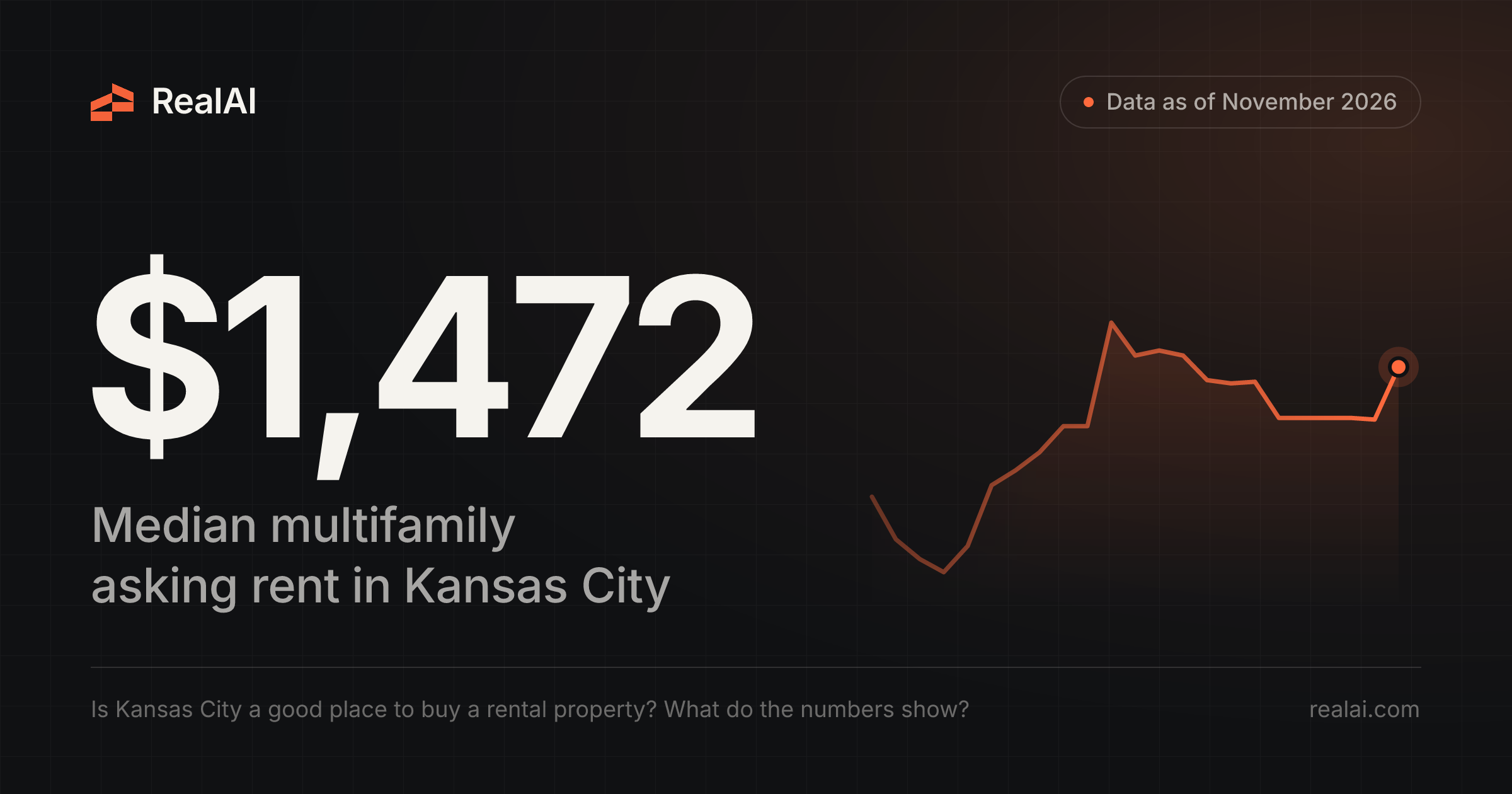
The median asking rent for an apartment in the metro is $1,472. Average asking rents by unit size are $1,385 for a one-bedroom, $1,725 for a two-bedroom and $2,040 for a three-bedroom.
Rents for tenants already in place grew faster than asking rents: up 4.5% over 12 months, compared with 3.2% for asking rents. New leases are signing at an average of 3.4% (about $38 a month) above what the previous tenant paid for the same unit. That points to steady pricing power, not a surge. Asking rents dipped 0.8% over the last three months.
Affordability gives landlords some room. The average rent is about 29% of the median household income, below the common 30% threshold for cost burden and rated below average in RealAI's national comparison.
Yields: what a 5.9% cap rate means
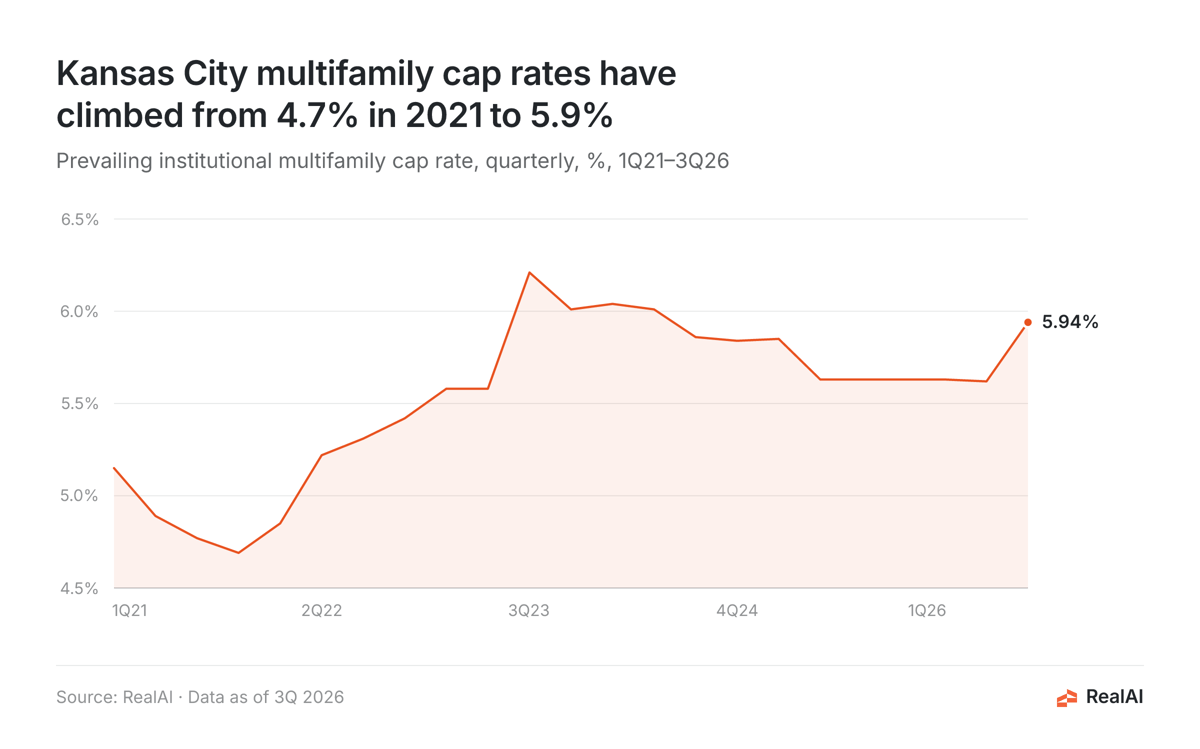
The prevailing cap rate for institutional multifamily property in Kansas City is 5.9% for the third quarter of 2026. That's up from 5.6% in each of the previous five quarters and well above the 2021 low of 4.7%. A higher cap rate means buyers are paying less for each dollar of net operating income. That helps a new buyer's starting yield, but it also reflects lower values than at the 2021 low in cap rates.
For smaller investors, a rough price-to-rent check helps. The metro's median estimated home value is about $320,000 (as of October 2026). Against the $2,040 average asking rent for a three-bedroom apartment, that's a price-to-rent ratio of about 13, or a gross yield near 7.6% before expenses. This is a rough market-level proxy that sets apartment rent against all-home value, not a quote for any one house. Single-family rents and condition vary a lot from one block to the next.
Expenses matter. In RealAI's multifamily operating data for the metro, net operating income is about 52% of effective gross income, meaning roughly half of collected revenue goes to operating costs.
Supply is the number to watch
The pressure in Kansas City comes from new construction. Occupancy across tracked properties is 93.9%, down about 2.1% from a year earlier. The latest quarterly market report puts multifamily vacancy at 8.7%. The two measures are calculated differently (RealAI's occupancy is an average across individual properties, while vacancy is a share of total inventory), but they point the same way.
More units are coming. The latest quarterly report counts 3,482 apartment units delivered year to date, 5,466 still under construction and net absorption of 1,050 units. Multifamily permits reached 6,346 units over the trailing 12 months, up 47% from 4,327 in the 12 months before that. Total housing permits, single-family included, rose 28% to 12,048.
Leasing is slowing too. The median apartment that signed a lease in the past 30 days had been on the market for 75 days, and about 69% of tenants renewed over the past year. Longer lease-ups and more competing units can lead to concessions, especially in newer buildings.
What the numbers add up to
Kansas City offers moderate rents, affordability tenants can handle and a cap rate that has reset higher. On the other side are falling occupancy, 8.7% vacancy and a construction pipeline that's still growing. Rent growth near 3% can hold if demand keeps absorbing the new supply. If it doesn't, the first effects would likely show up in occupancy and concessions before asking rents.
How we calculated this
Rent, occupancy, tradeout, retention, days on market and rent-to-income figures come from RealAI's rent index, which tracks public rental listings from property websites and listing feeds. The snapshot is dated November 14, 2026. Rents are medians and averages for multifamily units in the Kansas City, MO-KS metro (CBSA 28140). Changes compare the median against the same point 12 and 3 months earlier. The cap rate is the prevailing rate for institutional multifamily property for 3Q 2026, from RealAI's quarterly cap rate series, and may be revised. Vacancy, deliveries, absorption and under-construction counts come from the latest quarterly market report in RealAI's supply data. Permit counts are trailing-12-month building permits from RealAI's supply data. The price-to-rent figure divides the median estimated home value by 12 months of the average three-bedroom asking rent.
FAQ
What is the average rent in Kansas City?
As of November 2026, the median asking rent for a multifamily unit in the Kansas City metro is $1,472. The median rent tenants are actually paying on current leases is $1,361.
Is Kansas City rent going up?
Yes, modestly. Asking rents are up 3.2% over 12 months and in-place rents are up 4.5%. Asking rents slipped 0.8% over the last three months.
What is the cap rate for apartments in Kansas City?
The prevailing institutional multifamily cap rate is 5.9% for 3Q 2026, up from 5.6% a quarter earlier and from a low of 4.7% at the end of 2021. The latest quarter may be revised.
Is Kansas City overbuilt?
Supply is elevated. Vacancy is 8.7%, 5,466 units are under construction and multifamily permits are up 47% year over year. Whether that becomes oversupply depends on how fast new units lease up.
What should I check before buying a rental in Kansas City?
Look at the submarket and ZIP code, not just the metro. Check how much new construction is nearby, how occupancy is trending at comparable properties, and whether the rent you're underwriting matches recent leases rather than asking rents.
Want to see how a specific Kansas City submarket, ZIP code or property compares? Run your own analysis in RealAI.